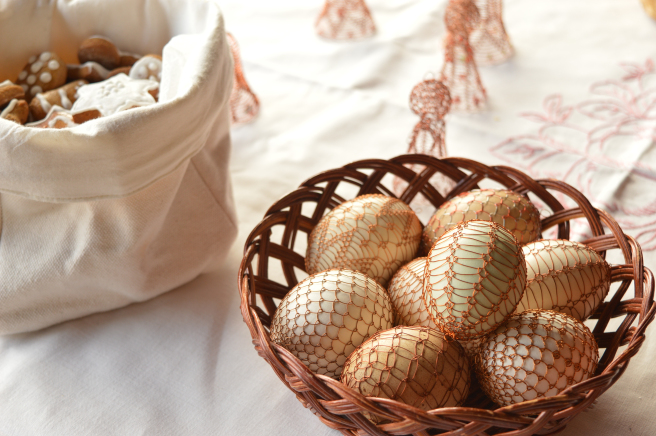
They symbolize spring, fertility, new life, and in the minds of Slovaks (as well as other Eastern European cultures), they are closely linked to Easter holidays. Eggs can’t be missing on the festive table in Slovakia. They come in all possible forms – boiled, fried, scrambled or made into hrudka (egg cheese), dyed, waxed, hand-painted or wired. Yes, apart from being an important food staple, the egg is also a popular artistic medium associated with our Easter traditions.
Perhaps the most unusual decorative technique among those mentioned above is wire wrapping – a very old and unique craft that originated in northern Slovakia in the 18th century. Back then, wire was used to repair old pots, cracked bowls, broken jugs and other objects of everyday life.
Over the centuries, the wire craft has evolved into an exquisite art producing decorative bowls, intricately woven silver baskets, or the finest jewellery. I was lucky to meet an amiable, chatty lady who was presenting this traditional Slovak art at a food event I’ve been to recently. And guess what was the main object of her work?
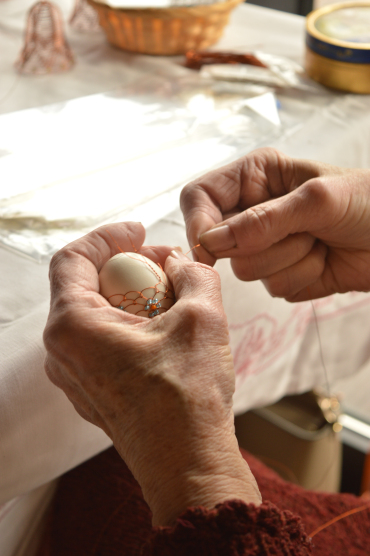

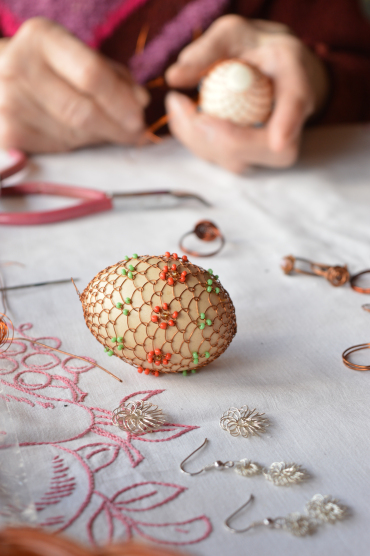
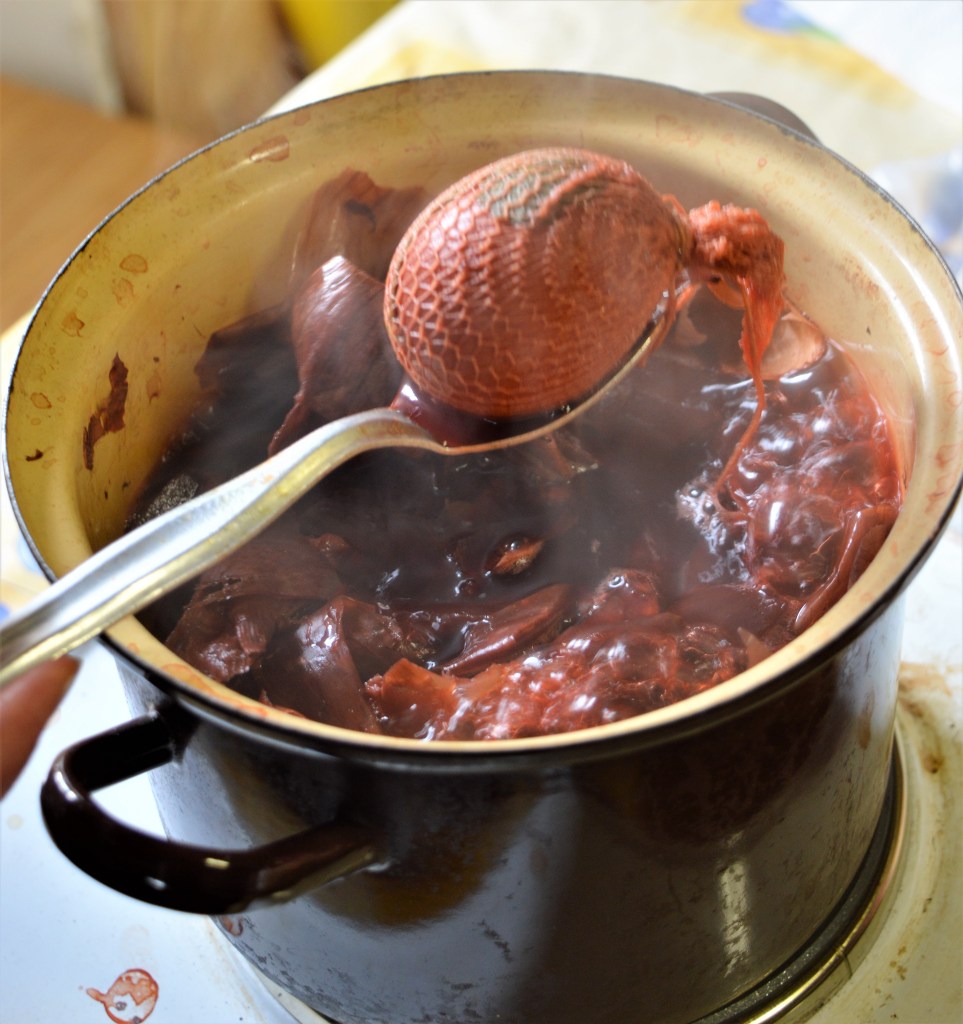
Before the wire is woven onto an egg, the egg’s contents must be blown out through two diminutive holes made on both ends. Sure, it takes a lot of skill and years of practice to weave the wire onto the fragile eggshell afterwards, but on top of its decorative function, the wire pattern also serves as a protective layer.While wire weaving is not for everyone, there are much simpler yet effective techniques to decorate your Easter eggs with. By wrapping the whole egg in a net and boiling it with peeled outer layers of an onion, or a piece of beetroot, the eggshell will acquire a natural reddish hue. If a herb or a leaf is placed on the shell under the net, the resulting pattern will be even more interesting.
A little more difficult but still doable is hand-painting and waxing – the two most popular techniques that are often taught at egg-decorating workshops before Easter.

Then you have crocheted, carved and lace-covered eggs, each of which is a masterpiece itself. Whatever technique is applied on the shell, the egg insides will never go to waste. We’ll use them in cooking (see Bird’s Milk) and baking or, in case of the dyed boiled eggs, eat them as part of our Easter feast after removing the shells.


 cookslovak
Leave a reply to Andrea Young Cancel reply